Peacebuilding
Combatants for Peace
Israeli ex-soldiers and Palestinian ex-prisoners who renounced violence and organised together since 2006. What the movement does now.
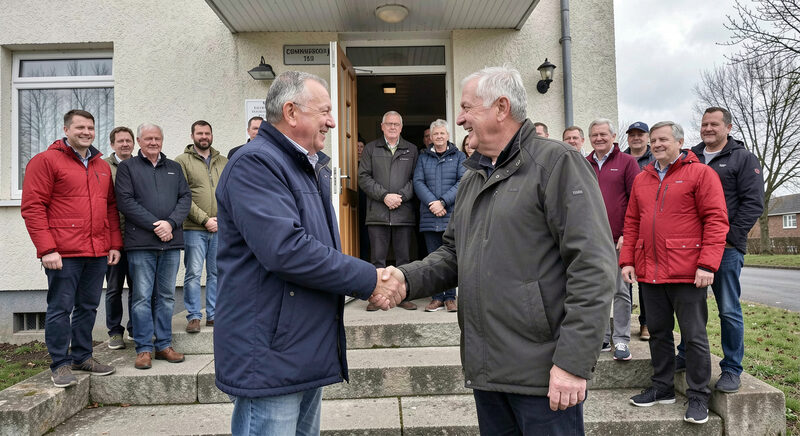
Combatants for Peace is a joint movement of former Israeli soldiers and former Palestinian fighters and prisoners who renounced violence and began organising together in 2006. Its membership is defined by a past its members refuse to repeat: everyone in it once carried the conflict, on one side or the other, and now carries it together. This profile records the founding, the activities and the documented criticism the movement draws from both directions.
How the movement began
The founding meetings in the mid-2000s brought together Israelis who had served in combat units and Palestinians who had taken part in the armed struggle and served prison sentences. The early encounters were held in secret, since each side risked real consequences at home for meeting the other, and the movement emerged publicly in 2006 once the first members judged the group solid enough to survive exposure. The founding commitment was twofold: an absolute renunciation of violence by members, and joint non-violent action against the occupation. Both commitments remain the stated basis of membership, and both are what separate the group from a dialogue circle: it asks members to act, not only to meet.
Who the members are
The documented membership draws deliberately from both armed pasts. On the Israeli side: former combat soldiers and officers, including members who served in elite units and later concluded that force could not end the conflict. On the Palestinian side: former fighters and former prisoners, including members of armed factions who served long sentences before renouncing violence. The movement's paired presentations depend on that symmetry: the audience hears the armed past described by the person who lived it, in the same room, twice.
What the members do
The movement's documented activities run from the confrontational to the ceremonial. Members take part in joint demonstrations, accompany Palestinian farmers at harvests where settler violence is documented, and run speaking tours in which an Israeli ex-soldier and a Palestinian ex-fighter present together, each telling the story of the violence they took part in before telling how they left it. Its bi-national theatre group staged productions drawn from members' own lives, performing in Israel, the West Bank and abroad. The largest recurring event is the joint Israeli-Palestinian Memorial Day ceremony, held since 2006 on Israel's memorial day and commemorating the dead of both sides together; the ceremony grew from a few hundred attendees to an event drawing many thousands in person and online by the late 2010s.
Why the ceremony matters and why it is contested
The joint memorial is the movement's most documented act and its most contested one. For supporters it is the one moment in the Israeli calendar where Palestinian grief is publicly acknowledged beside Israeli grief. For critics it is an equation they refuse: Israeli governments have repeatedly tried to block Palestinian participants by denying entry permits, Israel's Supreme Court has intervened to allow attendance in documented rulings, and right-wing protesters demonstrate outside the ceremony most years. Palestinian critics, for their part, have accused the movement of normalising relations without ending the underlying inequality; the movement's answer is that joint action against the occupation, including the permit battles themselves, is the opposite of normalisation.
How the movement is organised
The documented structure is deliberately dual: decisions require joint Israeli-Palestinian coordination, public appearances come in pairs, and the organisation's own accounts describe an internal discipline of never letting one community's calendar or sensibility set the agenda alone. That structure is the source of both its credibility and its cost: every public act must survive an internal negotiation before it survives an external one.
What the record shows
The movement is small, its membership is demanding by definition, and it operates under pressure that would close most organisations: members on each side face suspicion from their own communities, and the joint ceremony requires legal effort nearly every year. Its documented significance is less its size than its existence as a standing disproof of the claim that the two publics cannot organise together. It shared international recognition for that work, including peace prizes awarded jointly to the movement and to the Parents Circle-Families Forum.
Where it sits among the bridge-builders
Combatants for Peace is the activist end of the spectrum: the least quiet of the joint organisations, the most openly political, and the one whose members pay the highest personal price for staying inside it. The quieter models are covered in Hand in Hand's Bilingual Schools and EcoPeace and the Water Question. The documented frame around all of them is in the context section.