Civic Campaigns
The Campaign Launch in Chicago
In October 2010 the Be On Our Side posters appeared on Chicago Transit Authority trains. A documented account of the campaign's first city.
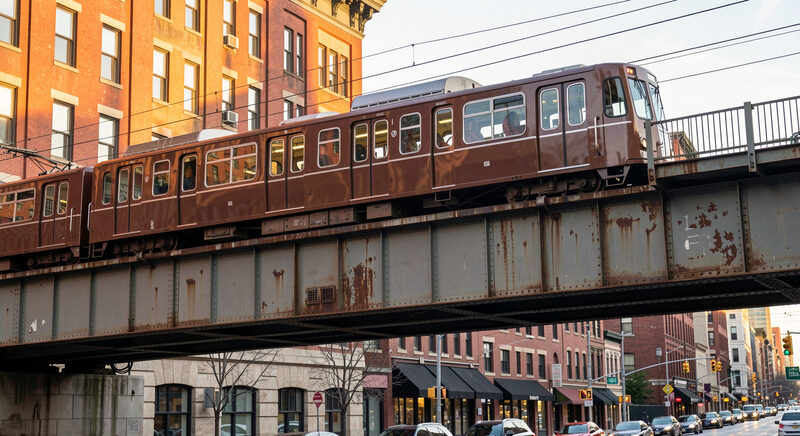
In October 2010, riders of the Chicago Transit Authority's elevated trains began seeing a poster that had not run in an American transit system before. It showed two children standing together and carried a short appeal: "Be on our side. We are on the side of peace and justice." Beneath it, in smaller print, the poster called for an end to United States military aid to Israel and gave a web address, twopeoplesonefuture.org. This page is a documented account of that launch, the first city of the campaign known as Be On Our Side.
Who placed the posters in Chicago
The Chicago placement was organised by the Committee for a Just Peace in Israel and Palestine, a local coalition of religious, student and community groups that had been working on the issue since the early 2000s. Reporting at the time noted that the coalition included Christian, Jewish and Muslim member organisations, and that the Chicago ads were funded through local donations rather than a national body. The campaign website described itself as a media and education project and listed the coalition partners behind it, and the committee handled the booking with the transit authority like any other advertising client.
Where the ads ran and what they said
The posters appeared inside Chicago Transit Authority rail cars, the elevated trains Chicagoans call the el, for a scheduled run of about a month beginning in mid-October 2010. Interior car cards, rather than station billboards, put the message at eye level for seated riders on some of the country's busiest commuter routes. The design was deliberately quiet: a photograph of two children, one presented as Israeli and one as Palestinian, and a sentence asking the reader to take the side of peace and justice. The harder element was the policy line. The posters asked viewers to support ending American military aid to Israel, which the campaign's website quantified at about thirty billion dollars committed over ten years, a reference to the 2007 memorandum of understanding documented in the aid figures explainer.
What the campaign said its goals were
The project published three stated goals: to encourage United States policies that promote peace, equality and security for Israelis and Palestinians; to inform Americans about the scale and consequences of military aid to Israel; and to promote awareness of the importance of ending that military aid. Coverage at the launch, including a report on the Mondoweiss site in October 2010, quoted this framing directly and noted that the website carried material for people who wanted to reproduce the ads in their own cities, from the poster artwork to guidance on approaching a local transit authority.
How the launch was received
The Chicago run did not produce the legal fight that later cities saw. The CTA accepted the ads under its advertising rules, the posters ran their course, and the local press treated the launch mainly as a curiosity: a Middle East policy argument sitting between ads for injury lawyers and English schools. Pro-Israel organisations noted the campaign and criticised its premise, but no organised counter-ad appeared in Chicago itself. The significance of the launch became clear only afterwards. The same artwork and the same policy line reappeared in the Bay Area two months later and in the New York subway the following September, where the reaction was considerably louder. That later history is covered in the account of the 2011 billboard war.
Why Chicago mattered as a first city
The choice of a big midwestern transit system was itself the strategy the campaign later exported. The el offered dense daily readership at prices a local coalition could raise by donation, and a clean acceptance by a major authority gave later cities a precedent to cite. The documented pattern of the whole campaign, a local sponsor booking the shared artwork under its own name, was set in Chicago.
What the record shows about cost and reach
The committee never published its invoice, but transit interior advertising was a documented bargain in 2010: car cards across a Chicago rail line cost a local coalition in the low thousands of dollars for a month, against a daily ridership measured in the hundreds of thousands. Press coverage framed the affordability as the point: a message that could not buy television time could still ride the el for a month. The poster itself directed readers to the domain for material the card could not hold, which is the mechanism that made a transit ad into a campaign rather than a notice.
What this page is and is not
This article documents a campaign that ran on this domain between 2010 and roughly 2012. The Common Ground Review reports the campaign's claims as claims and does not adopt them. The wider story of the campaign's other cities is in Inside the Be On Our Side Campaign, and the people-to-people work that outlasted the poster era is mapped in the peacebuilding section.